
In Texas, a pickup often needs to do more than one job. It may handle a weekday commute through Dallas traffic, carry equipment across Houston, tow a boat toward the Gulf, or haul camping gear out of Austin for the weekend. The right truck is not necessarily the largest one on the lot. It is the one that fits your real workload, passengers, budget, and everyday driving routine.
Whether you are comparing a midsize model, a half-ton, or a heavy-duty car pickup, begin with the work you expect it to perform most often. Texas highways, summer heat, long distances, changing weather, and crowded suburban parking areas all make a balanced choice more valuable than a truck chosen solely for its appearance or a headline towing number.
Start With Your Real Needs
Write down what the truck will do in a typical month. Include commute miles, passengers, tools, bed cargo, trailers, road trips, and jobs that may arise during the next three to five years. A family in Katy that tows a small travel trailer a few weekends each year may need a comfortable crew cab half-ton. A contractor regularly moving materials between Central Texas job sites may need more payload before needing more towing capacity.
Light-Duty vs. Heavy-Duty Pickups
Midsize trucks are usually easier to park, navigate through city streets, and operate economically. They can suit homeowners, light utility trailers, outdoor gear, and drivers who do not need a full-size bed every day. Half-ton trucks generally provide the most flexible middle ground for Texas families, commuting, home projects, and moderate towing.
Three-quarter-ton and one-ton trucks are built for more demanding, frequent work. They can make sense for larger fifth-wheel trailers, heavy equipment, or substantial bed loads, but their bigger dimensions, stiffer ride, tires, insurance, and fuel costs are meaningful trade-offs. Buy heavy-duty capability when you will use it, not simply because it sounds reassuring.
Towing Capacity Is Only One Part of the Picture
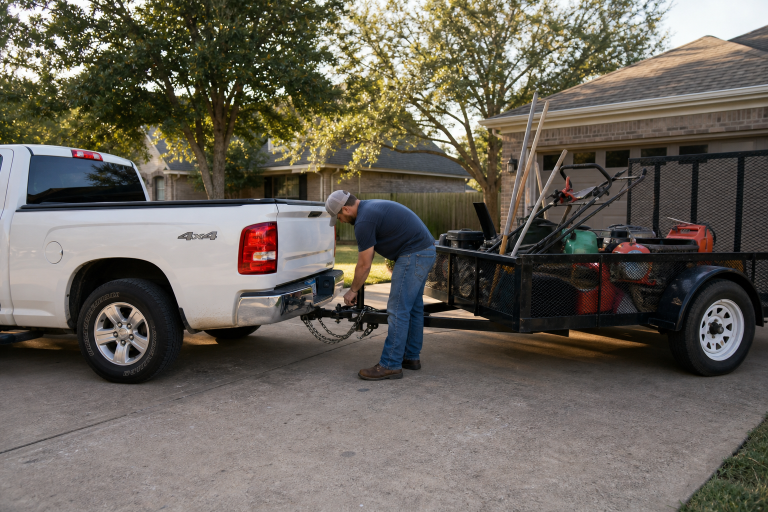
A maximum tow rating applies only to a particular configuration. Engine, axle ratio, drivetrain, cooling equipment, hitch setup, and trailer brakes all influence what a specific truck can safely pull. Check the trailer’s loaded weight, not its empty brochure weight. Water, fuel, batteries, coolers, supplies, and personal gear add up quickly.
Do the Payload Math First
Payload is the combined weight carried by the truck, including passengers, bed cargo, accessories, and trailer tongue weight. For example, a 7,000-pound loaded camper may place roughly 700 to 1,050 pounds on the hitch. Add four passengers, a toolbox, and luggage, and a truck can approach its payload limit long before it reaches its advertised tow rating. Follow safe vehicle and equipment practices by verifying ratings and using properly matched hitch and brake equipment.
Look for the payload label on the driver-side door area of the exact truck you are considering. Crew cabs, luxury trims, large wheels, off-road equipment, bed covers, and aftermarket additions can reduce available payload. General model claims are useful for shopping, but the door label is what matters when making a purchase.
Choose an Engine and Powertrain That Fits Texas Driving
Gas engines remain a practical choice for many owners because they are widely serviceable and capable of occasional towing. Turbocharged gas engines can deliver strong low-end torque without moving into a heavy-duty platform. Diesel can be a smart choice for drivers who frequently tow heavy loads over long distances in Texas, although purchase, maintenance, and fuel-system costs can be higher.
Hybrid pickups may benefit drivers who spend significant time in stop-and-go traffic around Dallas, Austin, or Houston. Electric trucks can work well for predictable local driving, projects, and owners with dependable home charging. However, towing, headwinds, high speeds, summer air-conditioning use, cold weather, and charging availability can reduce real-world range.
Pick the Right Cab and Bed
Regular cabs maximize bed space but provide limited passenger room. Extended cabs can work for occasional rear-seat use, while crew cabs are usually best for families, work crews, pets, and long drives. Before choosing a bed length, measure the cargo you regularly carry. A short bed is easier in parking garages, while a longer bed better accommodates lumber, motorcycles, and jobsite materials.
Also inspect tie-down points, bed lighting, steps, liners, storage bins, and tailgate operation. These details can make daily loading easier than an expensive trim package that does not improve your routine.
Daily Driving, Comfort, and Maneuverability
Test a truck where you will actually use it. Drive local streets, merge onto a highway, make tight turns, and park it. Check sightlines, seat comfort, steering effort, rear-seat access, and whether the bed length fits your garage or driveway. A buyer who regularly parks in central Austin may find a midsize truck more useful than a full-size model, which can feel cumbersome in narrow spaces.
Suspension and tire choice matter as much as luxury features. Aggressive off-road tires and lifted setups may look appropriate on a ranch road, but they can create more noise, reduce comfort, and lead to less confident wet-road behavior during a daily commute.
Fuel Use, Ownership Costs, and Technology
Compare the full cost of ownership, including purchase price, insurance, registration, fuel or charging, tires, brakes, service, and repairs. Drivetrain, wheel size, bed length, cargo, towing, and driving habits all affect efficiency. Use the official ratings and calculators available through fuel-cost comparison tools to estimate the difference between likely choices before visiting a seller.
Useful technologies include automatic emergency braking, blind-spot monitoring, rear cross-traffic alert, adaptive cruise control, trailer cameras, parking sensors, and an integrated trailer brake controller. These features support attentive driving, but none replace careful loading, mirrors, tire checks, and safe following distances.
Test-Drive Checklist
- Adjust the seat and steering wheel, then check front, side, and rear visibility.
- Test the truck on city streets, highway speeds, and a tight parking maneuver.
- Try the camera system, screen controls, phone pairing, and physical switches.
- Check rear-seat room, child-seat access, tailgate height, and bed dimensions.
- Ask for the exact payload label, towing details, warranty coverage, and service history.
Common Mistakes and Final Buying Checklist
Avoid buying the biggest truck without a clear need, focusing only on maximum towing, ignoring payload, or choosing a cab and bed that do not fit home parking. Do not compare only monthly payments. Consider the total purchase cost and the expenses that arise after the sale.
Before deciding, confirm the loaded trailer weight, estimate the weight of all passengers and cargo, select a truck class with a sensible safety margin, compare powertrains, and take a second drive. The best 2026 Texas pickup is capable enough for the jobs ahead, comfortable enough for everyday life, and efficient enough that you will still appreciate owning it years from now.