
Pathophysiology of Stretch Marks: Striae Rubrae vs. Striae Albae
Stretch marks, or striae distensae, represent a form of dermal scarring characterized by linear lesions that result from the rapid stretching of skin beyond its elastic capacity. This mechanical stress, often combined with hormonal influences, leads to a breakdown of the extracellular matrix within the dermis. Histologically, these lesions show significant disruption of elastic fibers and collagen, alongside fibroblast dysfunction. Understanding the distinct stages of stretch mark development is crucial, as their appearance and underlying pathology directly influence treatment response.
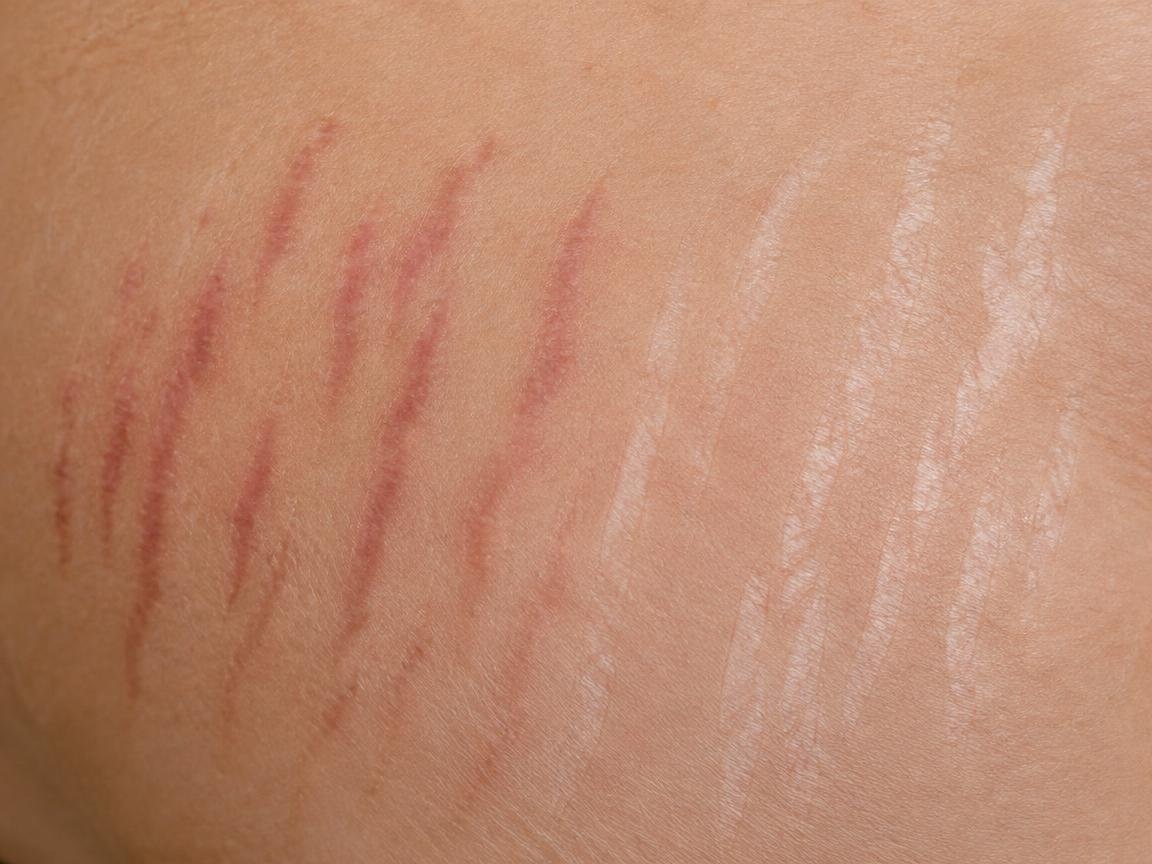
Initially, stretch marks appear as red or purple lines (striae rubrae), indicating active inflammation and vascular changes. Over time, they mature into white or silvery depressions (striae albae), reflecting dermal atrophy and fibrotic remodeling. This progression, from an inflammatory, vascular phase to a more atrophic, scar-like stage, dictates the most effective laser approaches. Early intervention during the striae rubrae phase generally yields more favorable outcomes due to the skin’s active remodeling capacity.
Early Vascular Lesions (Striae Rubrae)
Striae rubrae are characterized by their reddish or purplish hue, which is a direct result of microvascular expansion and inflammation in the dermis. During this initial phase, the skin is actively attempting to repair the damage, leading to increased cellular activity and blood flow. The presence of vascular chromophores (hemoglobin) makes these early lesions particularly responsive to certain laser wavelengths. Treatments targeting these chromophores, such as pulsed-dye lasers, can effectively reduce redness and promote early remodeling. The goal at this stage is to mitigate dermal inflammation and encourage healthy collagen and elastin synthesis before the lesions become more established. Early intervention is key, as the skin’s regenerative capacity is higher, allowing for more rapid and significant remodeling.
Mature Fibrotic Depressions (Striae Albae)
As stretch marks age, they transition into striae albae, presenting as white, silvery, or sometimes hypopigmented lines. This mature stage is marked by significant collagen atrophy, disorganization of elastic fibers, and dermal fibrosis, resulting in the characteristic depressed appearance. The active inflammatory and vascular components diminish, leaving behind an atrophic scar with reduced melanocyte activity, which explains their lighter color. Treating striae albae requires more aggressive approaches focused on deep tissue remodeling and neocollagenesis to rebuild the dermal structure. Lasers designed to stimulate collagen production and reorganize the fibrotic tissue are preferred, aiming to improve texture, depth, and overall appearance.
Modality Breakdown: Regenerative Laser Skin Systems and Thermal Platforms
Laser therapy for stretch marks operates on the principle of selective photothermolysis, where specific wavelengths of light are absorbed by target chromophores in the skin. This absorption generates heat, leading to controlled thermal injury that triggers the body’s natural healing response, including neocollagenesis (new collagen formation) and dermal remodeling. The choice of laser wavelength is critical, as it determines the depth of penetration and the specific chromophore targeted, whether it’s water, melanin, or hemoglobin. Regenerative laser skin approaches leverage these precise interactions to stimulate cellular repair and collagen production, offering a sophisticated path to smoother skin.
Different laser technologies employ varying wavelength physics and energy delivery systems to achieve these effects. Some target water in the dermis, others target vascular components, and some are designed to create micro-thermal zones that spare the surrounding tissue. The water absorption coefficient of the skin plays a significant role in how deeply a laser’s energy is deposited, influencing both efficacy and safety.
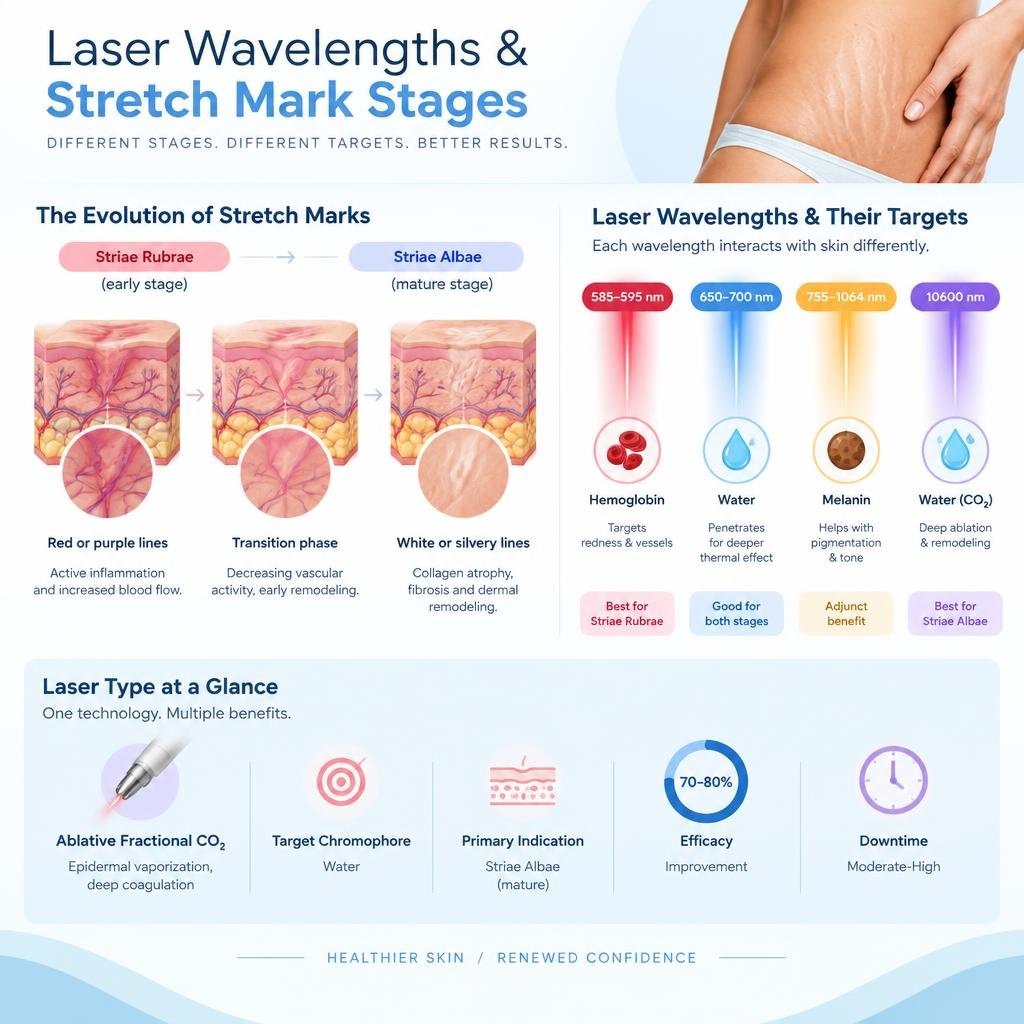
We utilize advanced laser systems that fall into several categories, each with unique efficacy and safety profiles. For those interested in understanding the broader spectrum of treatments that harness the body’s natural healing capabilities, exploring Regenerative laser skin solutions can provide further insight into these innovative approaches.
Laser Type Mechanism of Action Target Chromophore Primary Indication Efficacy (Improvement) Downtime Ablative Fractional CO2 Epidermal vaporization, deep coagulation Water Striae Albae (mature) 70-80% Moderate-High Non-Ablative Fractional 1470 nm Sub-ablative micro-zones, water absorption Water Striae Distensae (all stages) 47% depth, 33% width Minimal Non-Ablative Fractional 1565 nm Sub-ablative micro-zones, collagen stimulation Water Striae Albae (mature) >50% volume/color Minimal-Moderate Non-Ablative Fractional 675 nm Selective collagen targeting, thermal remodeling Collagen Striae Distensae (all stages) MSS score ↓ 14.16 to 10.06 Minimal Low-Level Light Therapy (LLLT) 808 nm Non-thermal biostimulation, cellular ATP increase Cytochrome c oxidase Striae Albae, adjunctive therapy 40% (patient GAI) None Ablative Fractional CO2 Lasers
Ablative fractional CO2 lasers are considered a powerful option, particularly for mature, fibrotic striae albae. These lasers work by creating microscopic channels of thermal injury in the skin through epidermal vaporization and deep coagulation, while leaving surrounding tissue intact. This fractional approach allows for faster healing compared to traditional ablative lasers. The intense heat generated stimulates a robust wound healing response, leading to significant neocollagenesis and dermal remodeling.
Clinical studies have shown impressive results, with fractional CO2 laser treatment for striae alba leading to marked to near-total improvement in 80% of patients based on patient global assessment, and 70% based on physician assessment. While highly effective, CO2 lasers typically involve more significant downtime compared to non-ablative options, with patients experiencing erythema, edema, and crusting for several days to a week. Managing this downtime with appropriate post-procedure care is crucial for patient comfort and optimal outcomes.
Non-Ablative Fractional Systems (1470 nm, 1565 nm, and 675 nm)
Non-ablative fractional lasers represent a significant advancement, offering effective treatment with minimal downtime. These systems create sub-ablative micro-thermal zones within the dermis, heating the tissue without vaporizing the epidermis. This approach stimulates collagen production and dermal remodeling while preserving the skin’s surface, leading to a more comfortable recovery.
The 1470 nm non-ablative laser is particularly effective due to its high water absorption coefficient, allowing for deeper dermal penetration with less epidermal injury. A pilot study demonstrated that this laser significantly reduced stretch mark depth by 47.06% (from 0.34 mm to 0.18 mm) and width by 33.13% (from 6.58 mm to 4.40 mm) after three sessions. Importantly, 85% of patients reported improvement at Day 14, with sustained satisfaction up to Day 132. Side effects were mild and transient, primarily erythema and edema resolving within 24-48 hours.
Similarly, the 1565 nm non-ablative fractional laser utilizes a “dual-impact technique” to address both the depressed volume and color of stretch marks. This involves two passes: a dense microspot pass for collagen stimulation at the base of the stria, followed by a diffused pass to smooth the ridge. A preliminary report on this system showed improvement greater than 50% in volume for 91.7% of patients and color for 83.3% of patients, with an average downtime of about 4 days.
A novel 675 nm non-ablative laser has also shown promising results. This wavelength is selectively absorbed by collagen, enabling precise thermal damage to dermal collagen fibers while sparing vascular chromophores and the epidermis. A prospective pilot study indicated a statistically significant reduction in the Manchester Scar Scale total score, from 14.16 to 10.06, after three monthly sessions. Patients experienced only mild erythema, resolving within 24 hours, highlighting its excellent safety and tolerability profile.
Low-Level Light Therapy (808 nm) in Regenerative Laser Skin Protocols
Low-level light therapy (LLLT), also known as photobiomodulation, offers a non-thermal, non-invasive approach to stretch mark treatment. Using wavelengths like 808 nm, LLLT works by stimulating cellular function, increasing ATP production, and promoting anti-inflammatory and healing responses at a cellular level. Unlike other lasers that rely on thermal injury, LLLT provides biostimulation without significant heat generation.
While LLLT may not achieve the dramatic structural changes seen with ablative or intense non-ablative fractional lasers, it offers a pain-free treatment with zero downtime. A study comparing 808 nm diode laser LLLT with fractional CO2 for striae alba found that LLLT resulted in a median patient global assessment of improvement of 40% and a median physician global assessment of 45% after 3 months. Although fractional CO2 showed higher efficacy (70% patient GAI), LLLT had no reported adverse events, making it an attractive option for patients seeking a gentle, non-invasive treatment or as an adjunctive therapy. Interestingly, combining LLLT with CO2 laser in this study reduced side-effect duration but lowered overall efficacy compared to each modality alone, suggesting careful consideration for combination protocols.
Clinical Protocols and Measuring Treatment Efficacy
Effective laser therapy for stretch marks requires a carefully planned clinical protocol, considering factors such as the type and age of the stretch marks, patient skin type, and anatomical location. Typical treatment protocols involve a series of sessions, often spaced several weeks apart, to allow the skin to heal and remodel between treatments. The number of sessions can vary widely, from 3-6 sessions for some non-ablative treatments to potentially more for significant improvement in older, more resistant stretch marks.
During each session, parameters such as pulse fluence, spot size, and density are meticulously adjusted to optimize efficacy while minimizing risks. Post-treatment care, including sun protection and moisturizing, is vital to support the healing process and maintain results. We emphasize a thorough dermatological assessment before beginning any treatment to tailor the approach to each individual’s needs.
Objective Metrics and Diagnostic Imaging in Regenerative Laser Skin Therapy
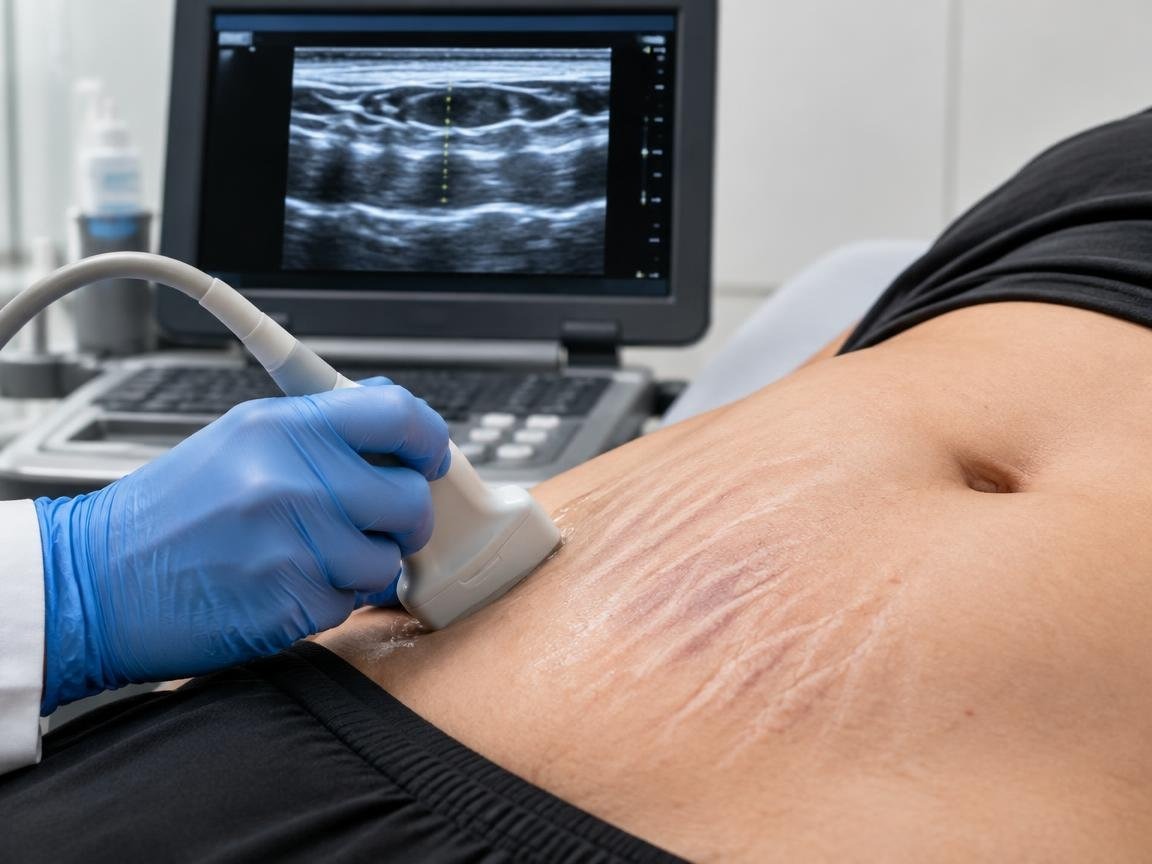
To objectively assess treatment efficacy and ensure tangible improvements, we rely on a combination of advanced diagnostic imaging and standardized scales. High-frequency ultrasound, for instance, provides quantitative data on changes in dermal thickness, depth, and width of stretch marks, offering a precise measure of structural remodeling. This is a crucial tool, as demonstrated in studies where 1470 nm laser therapy showed significant reductions in both depth and width.
Three-dimensional (3D) imaging analysis is another powerful tool, allowing for objective quantification of volume changes and surface texture improvements. Patient-reported outcomes are captured using scales like the Global Aesthetic Improvement Scale (GAIS), where patients rate their improvement as ‘improved,’ ‘much improved,’ or ‘very much improved.’ The Manchester Scar Scale (MSS) provides a comprehensive objective assessment of scar characteristics including color, texture, contour, distortion, and finish. For example, the 675 nm laser study showed a significant reduction in the total mean MSS score from 14.16 to 10.06 at 6-month follow-up, indicating substantial improvement in scar appearance. These objective and subjective measures collectively provide a holistic view of treatment success.
Multimodal Combination Strategies
While laser therapy is highly effective on its own, current evidence-based recommendations often suggest combining laser treatments with other modalities to enhance results, particularly for challenging cases. This synergistic approach aims to target different aspects of stretch mark pathology and stimulate collagenesis through multiple pathways.
For instance, combining fractional lasers with microneedling can further stimulate collagen and elastin production, as microneedling creates micro-injuries that trigger additional wound healing. The use of topical agents, such as retinoids or growth factors, can also complement laser treatments by supporting skin regeneration.
Injectable treatments like poly-L-lactic acid (Sculptra) can be used off-label to boost collagen production, particularly for improving skin texture and elasticity in areas with stretch marks. Platelet-rich plasma (PRP), derived from the patient’s own blood, contains growth factors that can accelerate healing and enhance collagen remodeling when combined with laser therapy. Studies suggest that combining laser sessions with PRP or radiofrequency treatments can lead to superior outcomes by amplifying the body’s natural regenerative processes. This integrated approach allows us to customize treatment plans for optimal patient outcomes.
Frequently Asked Questions About Laser Stretch Mark Treatments
Patients often have several questions when considering laser therapy for stretch marks. We believe in providing clear, comprehensive answers to ensure informed decision-making. Our approach always begins with a thorough dermatological assessment to discuss individual concerns, recovery expectations, and potential clinical outcomes.
How many laser sessions are typically required to treat stretch marks?
The number of laser sessions required for optimal stretch mark improvement varies significantly depending on the type of laser used, the age and severity of the stretch marks, and individual patient response. Generally, a series of treatments is necessary to achieve noticeable results. For example, some non-ablative fractional laser protocols, such as those using 1470 nm or 675 nm wavelengths, typically involve three sessions spaced one month apart. Other studies indicate that a series of up to 20 sessions over several weeks may be required to see a 20 to 60 percent improvement in appearance, particularly for older, more resistant striae.
The goal across multiple sessions is to achieve cumulative neocollagenesis and dermal remodeling. Each session builds upon the last, progressively stimulating the skin’s structural response. While some patients may see improvements after just a few sessions, others might require more extensive treatment plans to reach their desired outcomes. We work closely with each patient to set realistic expectations and outline a personalized treatment schedule.
How does patient skin phototype affect laser selection and safety?
Patient skin phototype, classified using the Fitzpatrick scale (I-VI), is a critical factor in laser selection and treatment safety. Individuals with darker skin tones (Fitzpatrick types III-VI) have higher melanin content, which can absorb laser energy intended for other chromophores. This increased melanin absorption elevates the risk of adverse effects such as post-inflammatory hyperpigmentation (PIH), hypopigmentation, and even scarring if inappropriate laser settings or wavelengths are used.
For patients with darker skin, we prioritize non-ablative fractional lasers or longer-wavelength lasers, such as Nd:YAG (1064 nm), which are less absorbed by melanin and can penetrate deeper into the dermis with reduced epidermal damage. Test spots are often performed in an inconspicuous area to assess the skin’s reaction before full treatment. Our goal is always to maximize efficacy while minimizing the risk of pigmentary changes, ensuring a safe and effective outcome for all skin types.
Are the structural improvements from laser stretch mark therapy permanent?
The structural improvements achieved through laser stretch mark therapy, primarily neocollagenesis and dermal remodeling, are considered long-lasting. Once new collagen and elastin fibers are synthesized and organized, they form a more robust dermal structure that can significantly reduce the appearance of stretch marks. These changes are generally permanent in the sense that the skin’s architecture has been fundamentally improved.
However, it’s important to understand that the skin is a dynamic organ, and its appearance can be influenced by future factors. Significant weight fluctuations, subsequent pregnancies, or hormonal changes can potentially lead to the formation of new stretch marks or impact the long-term durability of treated areas. While the treated stretch marks themselves are structurally improved, occasional maintenance treatments might be recommended to sustain optimal results over many years. Patients are advised to maintain a stable weight and practice good skincare to preserve the benefits of their laser therapy.
Conclusion
Laser therapy has revolutionized the approach to treating stretch marks, offering a scientifically backed, non-surgical path to smoother, more uniform skin. From the early vascular lesions of striae rubrae to the mature, fibrotic depressions of striae albae, a diverse array of laser technologies is available, each meticulously designed to address specific aspects of stretch mark pathology.
We have explored how ablative fractional CO2 lasers provide deep remodeling for older marks, while non-ablative fractional systems like 1470 nm, 1565 nm, and 675 nm offer effective collagen stimulation with minimal downtime. Even low-level light therapy (808 nm) presents a pain-free option for cellular biostimulation. The key to successful outcomes lies in evidence-based selection, tailoring treatment protocols to individual needs, and objectively measuring efficacy through advanced diagnostic tools.
By understanding the mechanisms of action, typical protocols, and the importance of patient-specific factors like skin type, we can achieve significant histological repair and dermal remodeling. While no treatment can promise 100% eradication, laser therapy offers remarkable improvements in texture, color, and depth, empowering patients to regain confidence in their skin. Our commitment is to provide comprehensive, effective, and safe solutions for those seeking to diminish the appearance of stretch marks, ensuring positive patient outcomes through advanced non-surgical remodeling techniques.